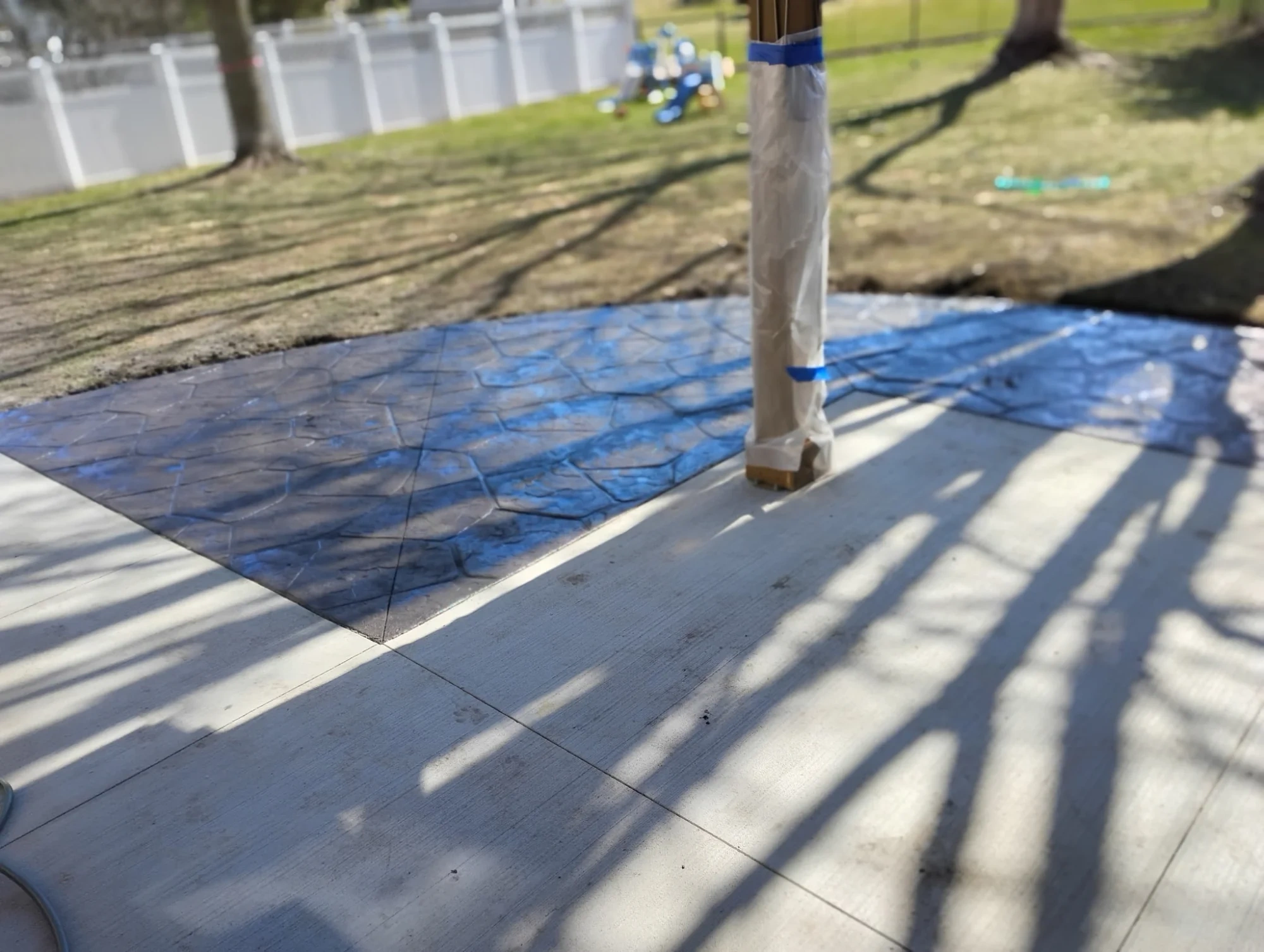
What Concrete Repair Actually Involves
Concrete repair is not a single technique. It is a diagnostic process that begins with understanding why the damage occurred and ends with a restoration that addresses the root cause, not just the surface symptom. In Rochester, MN, the freeze-thaw cycle is the most common culprit. Water infiltrates hairline cracks, freezes and expands in January, and by March those cracks have widened into structural concerns. Surface scaling and spalling often follow years of road salt tracking in from the street. Left untreated, the damage compounds with every winter.
Pouring Praises approaches each repair job with a full assessment of the slab’s condition, substrate integrity, and drainage situation. For minor surface cracking, we use a polymer-modified repair mortar that bonds to the existing concrete and flexes with seasonal movement. For deeper structural cracks, we rout the crack profile, clean the void, and fill with a semi-rigid polyurethane or epoxy injection compound depending on whether the crack is active or dormant. Sunken slabs are addressed through mudjacking or slab leveling before any surface work begins.
The quality of a repair depends almost entirely on preparation. Delaminated concrete is ground back to a sound substrate. Loose aggregate is removed. The repair area is profiled so the patch material has mechanical adhesion, not just a chemical bond. We match the finish texture to the surrounding slab so the repair blends rather than reads as a patch. That level of care is what separates a repair that lasts a decade from one that fails by next spring.
Common Repair Situations
- Wide or stepped cracks in driveways and garage floors
- Spalling and scaling from freeze-thaw or road salt exposure
- Sunken or uneven slabs creating trip hazards
- Control joint deterioration and crumbling edges
- Delaminated overlays or failed coatings
- Surface pitting in high-traffic commercial areas
- Damaged stoop corners and curb edges
Why Rochester Property Owners Call Pouring Praises
01 / DIAGNOSIS FIRST
We Fix the Cause, Not Just the Crack
Most crack repairs fail within two to three years because the underlying cause, whether drainage, base settlement, or a misplaced control joint, was never addressed. Before any material goes down, Pouring Praises identifies what created the damage. If water is the issue, we address grading and joint sealing before patching. If the base has settled, we compact or stabilize it before resurfacing. This diagnostic-first approach means your repair investment actually holds through Minnesota winters instead of reopening by spring.
Insured and bonded. Serving Rochester, MN and Olmsted County.
02 / MATERIAL MATCH
Repairs That Blend In
We texture-match repair mortars to surrounding slabs so finished patches read as concrete, not obvious filler. Color and finish consistency matters on driveways and patios where the whole surface is visible at once.
03 / LONG-TERM INTEGRITY
Products Rated for MN Conditions
Every repair compound we use is rated for northern freeze-thaw cycles. We do not use big-box hydraulic cement as a structural repair material. The right product for Rochester’s climate makes the difference between a repair that lasts and one that pops out next February.
Our Concrete Repair Process
Assessment and Surface Preparation
We walk the damaged area and probe the concrete to identify delamination, structural cracking, and drainage issues. All loose, delaminated, or deteriorated material is ground or chiseled back to a sound substrate. The repair zone is profiled with an angle grinder or diamond blade to create a mechanical key for the repair material. Dust and debris are removed with a blower and shop vac. No repair material goes on contaminated concrete.
Repair Material Application
Based on the assessment, we select the appropriate repair system: polymer-modified mortar for surface repairs, semi-rigid polyurethane or epoxy injection for structural cracks, or a full bonded overlay for widespread surface deterioration. A bonding agent is applied to the prepared substrate before any cementitious material is placed. Repair material is packed or troweled in lifts where needed and consolidated to eliminate voids. Edges are feathered or formed to match the surrounding plane.
Finish, Cure, and Sealing
Once the repair material has achieved its initial set, the surface is finished to match the texture of the surrounding concrete. Broom, trowel, or exposed aggregate finishes are replicated as closely as the repair geometry allows. A curing compound or wet burlap cover protects the repair through the initial curing period. After full cure, we apply a penetrating concrete sealer across the repaired area and often the full slab face to prevent future water infiltration and protect against road salt damage through the next winter season.
Serving Rochester and Southeast Minnesota
Pouring Praises provides concrete repair throughout Rochester, Olmsted County, and the broader Southeast Minnesota region. From residential driveways in the northwest neighborhoods to commercial parking lots and warehouse floors along Highway 52, we handle repair projects of all scales. Whether you’re dealing with winter heave on a single front walk or widespread spalling on a multi-bay commercial floor, we bring the same diagnostic process and material standards to every job.
We serve Rochester and surrounding communities including Byron, Stewartville, Kasson, Mantorville, and Zumbrota. View our full service area to confirm coverage in your location.
Concrete Repair Questions
How much does concrete repair cost in Rochester, MN?
Concrete repair pricing in Rochester depends on the type and extent of damage, the repair method required, and the size of the affected area. Surface crack filling on a residential driveway might run a few hundred dollars for a small area. Structural crack injection, full slab leveling, or a bonded overlay on a larger commercial floor will be priced on a per-square-foot basis after an on-site assessment. Pouring Praises provides a detailed free quote after seeing the damage in person. We do not provide ballpark pricing without looking at the work because concrete repair scopes vary too widely to quote accurately over the phone.
How long does a concrete repair take to complete?
Most residential concrete repairs are completed in a single day. A cracked driveway section or spalled garage apron typically takes two to four hours of active work followed by a cure period before the surface can take foot or vehicle traffic. Structural crack injection jobs cure faster because the fill material sets quickly. Larger commercial repairs or bonded overlays over a full warehouse bay may take two to three days depending on slab size and the number of repair lifts required. We provide a realistic timeline at the quote stage and work around your schedule when access windows are limited.
How long will a concrete repair last?
A properly executed concrete repair should last ten to twenty years or more when the root cause is addressed and the right materials are used. Repairs that fail quickly almost always share one of two problems: the substrate was not prepared to a sound surface before patching, or a general-purpose filler was used where a freeze-thaw rated repair mortar was needed. Pouring Praises uses products rated for Minnesota’s climate and prepares every surface to mechanical profile before placing repair material. After the repair, sealing the concrete surface annually extends the life of both the repair and the surrounding slab.
Can you repair concrete in cold weather or does it have to wait until spring?
Many concrete repairs can be performed in cooler temperatures with the right material selection and curing protection. Repair mortars have minimum application temperatures, typically around 40 degrees Fahrenheit, and we use accelerated-cure formulations and heated blankets to maintain proper temperatures when needed. We do not apply water-based repair compounds when ground temperatures are at or below freezing or when a hard freeze is forecast within the cure window. If your damage is active, we can assess whether a temporary protective measure makes sense over winter while scheduling the full repair for spring.
Do I need to seal concrete after it has been repaired?
Sealing repaired concrete is strongly recommended, especially in Rochester’s climate where road salt and freeze-thaw cycles are the primary sources of long-term surface damage. A penetrating silane or siloxane sealer applied after the repair has cured creates a hydrophobic barrier that limits water infiltration into the slab. This protects both the new repair material and the surrounding concrete from the same cycle of freeze-thaw expansion that caused the original damage. We include sealing as part of most repair projects and recommend reapplying a penetrating sealer every two to three years to maintain coverage.
Ready to Fix Your Concrete?
Don’t let cracks and spalling get worse through another Rochester winter. See our repair work in the gallery, then reach out when you’re ready.
Also need new work done? Contact us to discuss the full project.