What We Build
Built for the
weight of the work
6 to 12″
Typical reinforced slab thickness for full-capacity grain loads
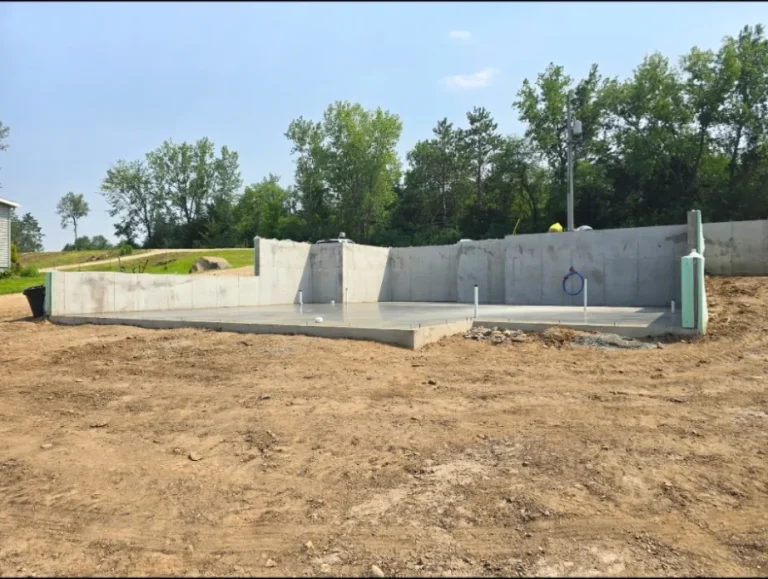
A silo base slab is one of the most load-intensive concrete placements on a working farm. When a grain bin or upright silo is filled to capacity, the ring footing and base ring transfer enormous compressive force down into the slab below. In SE Minnesota, that load gets compounded by freeze-thaw cycling that can heave a poorly designed base and crack the silo wall above it. Getting the thickness, reinforcement, and sub-base right before the pour is not optional.
At Pouring Praises, we start every silo base slab engagement with a site evaluation. We check the existing soil bearing capacity, assess drainage patterns around the proposed site, and look at what the bin manufacturer specifies for the foundation ring diameter and load requirements. Concrete that’s engineered for 3,500 PSI but placed on poorly compacted fill won’t last, regardless of how clean the finish looks. We bring in compacted gravel sub-base and vapor barrier where conditions warrant, before a yard of concrete gets ordered.
The pour itself is scheduled around the forecast. SE Minnesota’s shoulder seasons mean concrete placed in cold-weather conditions needs protection to cure properly. We use insulating blankets when temperatures drop and we verify concrete temperature at the truck before placement begins. The finished slab is hand-troweled to a smooth, dense surface that resists the grain dust, spilled corn, and cleaning equipment that farm bases see year after year. Insured, bonded, and experienced with agricultural placements across Olmsted County and the surrounding region, we’re the crew Rochester-area farmers call when they want it done right the first time.
What sets our silo pours apart
Agricultural concrete isn’t residential flatwork scaled up. Different loads, different site conditions, different failure modes. Here’s how we approach it.
Load-Matched Reinforcement
We size rebar and mesh to the actual bin diameter and stated bushel capacity, not a generic residential spec. A 30-foot grain bin ring places its load in a narrow annular zone, and the slab steel has to address that concentration specifically. We calculate it, we don’t guess it.
Freeze-Thaw Ready Sub-Base
Rochester averages over 40 freeze-thaw cycles per year. A heaved silo base can crack the foundation ring, rack the bin wall, and render the entire structure unusable. We bring in clean crushed gravel, compact it in lifts, and slope the site for drainage before any concrete is placed. That sub-base is what the concrete is really resting on.
Coordinated with Your Bin Erector
We work directly with the bin dealer or erecting crew on anchor bolt placement, ring diameter, and the hold-down pattern the manufacturer specifies. Anchor bolts placed wrong mean a return trip and core drilling. We get them right in the pour, positioned and templated before the concrete sets.
We carry full general liability insurance and contractor bonding. Before any agricultural pour begins, you’ll have certificates in hand, not just a verbal assurance.
- Local Knowledge
- Rochester and Olmsted County soils vary. We’ve poured on black clay, sandy loam, and everything between. Soil conditions change the sub-base spec.
- Mix Design
- We specify 4,000 PSI air-entrained mix for agricultural bases. Air entrainment is the primary defense against freeze-thaw scaling on exposed slabs.
- Surface Finish
- Hand-troweled smooth finish resists grain dust infiltration and stands up to power washing and skid-steer traffic around the bin perimeter.
Our silo base process
Three steps from site to finished slab. No surprises, no change orders for things we should have caught at the start.
Site Evaluation and Layout
We visit the site before scheduling the pour. We confirm the intended bin location, check slope and drainage, probe soil conditions, and review the bin manufacturer’s foundation specification sheet. Anchor bolt templates are fabricated to the exact pattern the bin erector needs. If the sub-base requires excavation and fill, we scope that work during the site visit so the quote reflects what the job actually requires.
Sub-Base Preparation and Forming
We excavate to grade, compact crushed gravel sub-base in lifts, and install vapor barrier where moisture is a concern. Forms are set to the slab diameter and thickness specified for the load. Rebar is placed and tied to the engineer’s pattern, anchor bolt templates are positioned and braced, and the form is inspected before we call for concrete. Nothing moves during the pour.
Pour, Finish, and Cure
We verify concrete temperature and slump at the truck on arrival. The slab is placed, consolidated with internal vibration, and finished to a smooth hand-troweled surface. Curing compound is applied immediately after finishing and insulating blankets go down if temperatures require it. We don’t strip forms until the concrete reaches minimum strength. You get a slab that’s ready for the bin erector when you need it, not before it’s actually cured.
Rochester and SE Minnesota
Pouring Praises serves agricultural concrete customers throughout Rochester, Olmsted County, and the surrounding SE Minnesota region, including Dodge, Fillmore, Mower, and Winona counties. If you’re planning a bin addition, a new grain storage facility, or a replacement slab under an existing structure, we cover the territory.
Rural customers across SE Minnesota rely on us for the same quality of work that Rochester-area farms get. Travel isn’t a barrier. Give us a call or fill out the contact form and we’ll get back to you with a straight answer about what your project needs. View our full service area for the complete list of communities we cover.
Common
Questions
Silo base slabs come up less often in conversation than driveways or patios, so here’s what Rochester-area farmers and ag operators typically want to know before they call us.
Walk the Site With Us →What does a silo base slab cost in Rochester, MN?
Silo base slab pricing depends on diameter, thickness, reinforcement spec, and site conditions. A basic 18-foot diameter slab for a smaller grain bin will run substantially less than a 48-foot diameter slab with deep sub-base work and full anchor bolt templating. After a site visit we can give you a concrete number, not a range wide enough to be useless. Contact us at (507) 735-8820 or through our quote request form to schedule a site visit.
How long does a silo base slab take to pour and cure?
The pour itself typically takes one day for a standard bin base. Sub-base preparation adds one to two days depending on how much grading and compaction the site requires. Concrete reaches the minimum strength needed for form removal in three to seven days under normal Rochester-area summer conditions. We recommend waiting 28 days before the bin erector applies full load. We schedule around your erecting crew’s timeline so the slab is ready when they arrive.
How thick does a silo base slab need to be?
Thickness is determined by the bin’s diameter, bushel capacity, and the bin manufacturer’s foundation specification. Smaller bins on good soil might call for a 6-inch slab with standard rebar. Larger bins or sites with lower bearing capacity typically require 8 to 12 inches with heavier reinforcement. We review the manufacturer’s spec sheet for every project, because a slab that’s under-built for the load it’s carrying is a failure waiting to happen.
How long will a properly poured silo base slab last in SE Minnesota?
A well-designed and properly placed silo base slab should last 40 to 60 years or more under normal agricultural use. The biggest threat in SE Minnesota is freeze-thaw damage to the concrete surface and sub-base heaving. Both are addressable with the right air-entrained concrete mix, proper drainage, and compacted crushed gravel sub-base. Slabs that fail early typically do so because of one of those three factors, not because concrete inherently wears out.
Can you replace an existing silo base slab, or does the bin have to come down?
Replacing a deteriorated silo base while the bin is standing is possible in some cases, but it’s a more complex project than a new pour. It depends on how the original base was constructed, whether the ring footing is embedded or surface-mounted, and the overall condition of the structure above. If your existing base is cracked, heaving, or showing signs of settlement, call us for a site evaluation. We’ll tell you honestly whether a repair or full replacement makes sense, and whether it’s practical to do the work with the bin in place or whether you’re better off taking it down first.
Ready to plan
your silo base?
Pouring Praises Custom Concrete handles everything from site evaluation to finished slab. Insured, bonded, and familiar with SE Minnesota soil and weather. Let’s talk through what your project needs.