Cannon Falls Stamped Concrete
Cannon Falls Stamped Concrete
Poured, pressed, sealed.
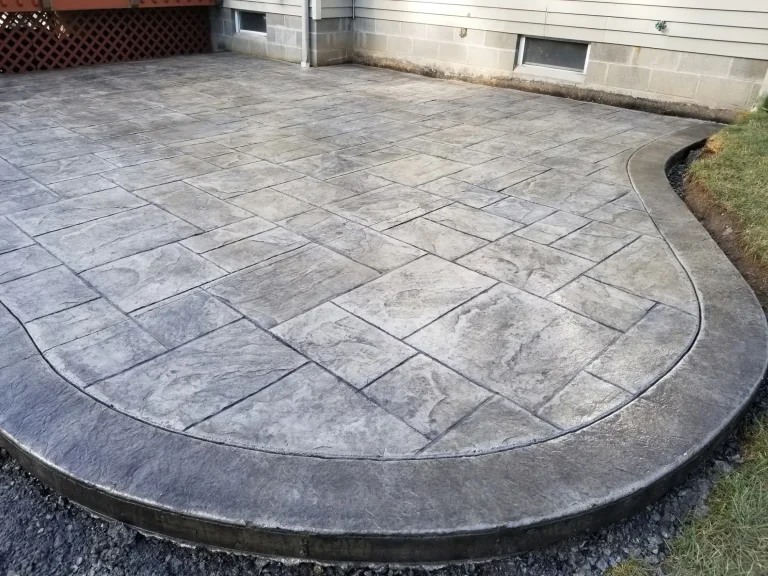
Patios, walks, entries and drives pressed with a stone or plank texture while the slab is still workable. You choose the pattern and the color off a cured board, not a paper chip. The joints get planned into the pattern, and the sealer goes on after the concrete has cured, not the day the truck leaves.
Before The Truck
Pattern and color get settled on a board, not on your patio.
01
The Texture
Pick the press you can live with.
A stamp mat presses a texture into the wet slab. Some read as cut stone with tight joints, some as irregular fieldstone, some as sawn plank. The tighter the joint spacing, the busier the surface looks on a large patio, and the more places grit has to sit. We walk the shape of your slab with you first, because a texture that suits a narrow front walk can be too much on a wide back patio.
02
Two Colors, Not One
Base tone and release tone.
Color comes from two places. Pigment mixed into the concrete itself sets the base tone straight through the slab. A release powder broadcast on the surface at stamping time keeps the mats from grabbing and drops a second, darker tone into the low points so the texture reads with depth. Change either one and the finished look changes, so we settle both together.
03
Cured, Not Wet
Judge it dry and in daylight.
Wet concrete is always darker than cured concrete, and a color that looks right in a shop looks different under Cannon Falls daylight. We put down a small sample so you can look at the real cured color, outdoors, on your own ground, before we commit a whole slab to it. Approve it there and there are no surprises later.
Honest Expectations
What the color does over the years.
Stamped concrete is concrete. It is not stone, and we will not sell it to you as stone. Up close you can tell, and anyone who says otherwise is setting you up to be disappointed on the day the forms come off. What stamped concrete does well is give you one continuous, sound slab with a texture and a color you chose, at a scale that would be difficult and slow to build out of individual pieces. That is a real advantage on a patio or a wide front entry, and it is the honest reason to pick it.
Expect some variation from pour to pour, too. Concrete is a mixed material delivered by truck, and moisture content, mix temperature and how long the load sat all nudge the finished tone. If your project runs across two trucks, or if you add a section next year, there can be a visible difference at the seam. We plan the pour and the joint layout so any seam falls somewhere it makes sense rather than through the middle of the space, and we tell you where it is going to be before we pour it. See what finished work looks like in our project gallery.
The Upkeep Part
Sealer is the job that never really ends.
Sealer does two things on stamped work. It holds the color, and it keeps water from soaking into the surface and freezing there. In a climate that swings above and below freezing dozens of times a winter, water sitting in the top layer of a slab is the whole problem, because it expands every time it freezes and works at the surface from the inside. A maintained sealer is the cheapest defense you have against that.
Deicing salt is the one thing we ask you to keep off a sealed decorative slab. Salt drives repeated freeze and thaw cycles right at the surface, and it chews the sealer, which then stops protecting the concrete under it. Sand for traction instead. Shovel rather than chip. If you drive over the slab, keep the plow blade skidded or lifted at the transitions. None of that is fussy maintenance, it is just the difference between a patio that looks good in ten years and one that does not.
Underfoot
How a pressed surface behaves when it is wet.
People ask about slipping, and the fair answer is that it depends on two things: how deep the texture is and what is on top of it. A deep, irregular press has more edges to grip than a shallow, smooth one, so the pattern itself is part of the traction decision. On steps, on a walk that runs to a door, and anywhere water sheets across the surface, we steer toward the textures with more relief for exactly that reason.
Joints matter here too, and they matter for a different reason. Concrete cracks, and control joints are how you decide where. On a stamped slab we lay those joints into the pattern lines so they disappear into the texture, then cut them on schedule while the slab is young. Done that way the slab still relieves its stress, and you get a joint line that reads as part of the design instead of a saw cut running across the middle of the surface. Talk it through with us on the contact page.
Working Here
Scheduling a pour on the Cannon River.
Cannon Falls sits in Goodhue County along the Cannon River, on the Highway 52 run between Rochester and the Twin Cities. That corridor is what makes the town easy for us to serve out of Rochester, both for the pour itself and for coming back later when a sealer coat comes due. Being close enough to return matters more on stamped work than on a plain slab, because the finish is a maintained finish.
The season here is short and it sets the calendar. Concrete needs reasonable temperatures to place, finish and cure, and stamped concrete adds a narrow working window on top of that: the slab has to be firm enough to hold an impression and still soft enough to take one cleanly. That window shrinks on a hot, dry, breezy afternoon and stretches on a cool overcast one. We watch the forecast, book the truck around it, and bring enough hands to press the whole slab inside the window rather than chasing it across the surface.
If you are weighing options, look at what sits next to the stamped area as well. A stamped patio often ties into a plain broom-finished patio or a poured driveway, and the transitions look best when they are planned together. If you want texture and color without a full stamp, ask about decorative finishes, or about polished floors for an interior space. Everything we build in town is listed on the Cannon Falls page, and our main stamped concrete page covers how we approach this work across the whole region. Call (507) 735-8820 and we will come look at the site.
Straight Answers
What Cannon Falls owners want to know.
Will my stamped patio look exactly like stone?
No, and we would rather say so up front. It is concrete pressed with a texture and colored to suggest stone, and from a few feet away it reads that way. Up close you can tell. What you gain is one continuous sound slab at a size and shape that would be slow to build out of individual pieces.
Why does the color change after a few years?
The surface release tone is the part that weathers, and sun, rain and shoveling soften it over several seasons. The pigment mixed through the slab is much more stable, which is why we do not rely on surface color alone. A maintained sealer slows the change considerably.
Can I use ice melt on a sealed stamped surface?
We ask you not to. Deicing salt drives repeated freezing and thawing right at the surface and it attacks the sealer, which then stops protecting the concrete underneath. Use sand for traction and shovel rather than chip. That one habit does more for the life of the slab than anything else you can do.
How soon after the pour can it be sealed?
Not right away. Fresh concrete has to release moisture first, and sealing too early can trap water, cloud the finish, or cause it to lift later. We wait for the slab to cure properly, then put the first coat down and walk you through when the next one is due.
Will two sections poured at different times match?
Close, but rarely identical. Concrete is a mixed material, and moisture, temperature and load timing all shift the finished tone slightly. We plan the joint layout so any seam lands somewhere sensible, and we show you where it will be before we pour rather than after.
Service Area
Pouring for Cannon Falls and Goodhue County.
Ready When You Are
Come look at the site with us.
The visit costs nothing and the written quote spells out what you are paying for. Bring your questions about pattern, color and upkeep, and we will answer them before anybody signs anything.