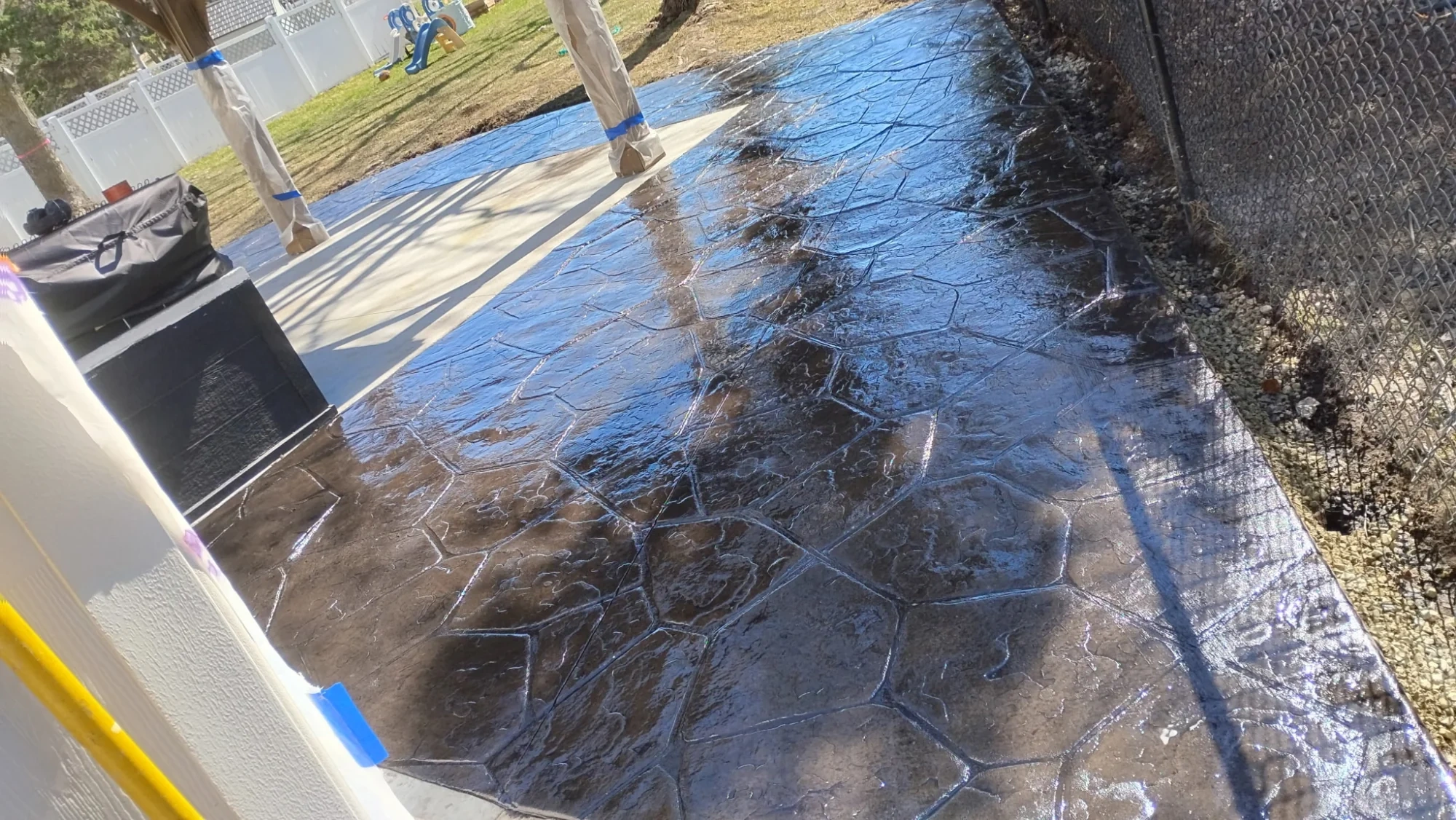
For decorative concrete that keeps its color through Kasson winters, integral color is the most durable because the pigment runs all the way through the slab and cannot wear off. Acid stain gives a rich, marbled look and is also permanent in the surface. Water-based dye offers the widest, brightest palette but is a thin surface treatment better kept indoors. Whichever method you pick, the sealer is what actually protects the color from road salt and UV, and it needs re-application every three years.
The most common disappointment we hear about decorative concrete in the Kasson area is that a colored slab someone else poured faded within a couple of winters. It almost never has to happen. Fading is usually a sign that the wrong coloring method was used for the application, or that the sealer was never kept up. This post walks through the three ways to get color into concrete, which one fits a Kasson driveway, patio, or floor, and why the sealer is the part that decides whether the color lasts three years or thirty.
Integral Color: Mixed in the Truck, Permanent
Integral color is pigment added to the concrete in the ready-mix truck before it is placed. The pigment, almost always synthetic iron oxide, distributes evenly through the entire slab, so the color goes all the way through. Grind the surface down to bare aggregate in ten years and the color underneath is the same. This is the right method for any horizontal Kasson slab that has to last: driveways, patios, pool decks, walkways, anything taking UV, freeze-thaw, road salt, and traffic.
Integral color has one constraint. The pigment is dosed as a percentage of the cement content, usually one to seven percent, and above that it starts to weaken the concrete. So integral comes in earth tones, charcoals, rusts, slate-grays, and warm tans, but not in saturated brights. For a Kasson driveway or patio we recommend integral first and pour a one-foot sample board mid-week so you see the cured color under your own daylight before the full pour.
Acid Stain: A Chemical Reaction, Marbled and Rich
Acid stain is a metallic-salt solution applied to cured concrete that reacts with the calcium hydroxide in the surface. The reaction etches color into the top millimeter or two, producing a variegated, marbled, translucent color that looks like natural stone and nothing like paint. Every slab comes out slightly different, and that variation is the appeal. We use acid stain most on Kasson patios with pattern accents, on stamped slabs where we want color to settle into the joint detail, and on interior basement floors where the depth sells the upgrade.
Acid stain is permanent in the etched layer once neutralized, but it lives near the surface, so it needs a sealer to survive a Minnesota winter. Its palette is limited to the chemistry, rust browns, deep blacks, blue-greens, ambers, and no bright colors. On an exterior Kasson slab, acid stain sealed correctly and re-sealed on schedule holds beautifully.
Water-Based Dye: The Widest Palette, Best Kept Indoors
Water-based dyes use micron-sized pigments in a water carrier that penetrate the surface a fraction of a millimeter. Application is fast, the color comes up immediately, and the palette is the widest of the three: real reds, oranges, blues, and saturated greens that acid stain cannot produce. The catch is durability outdoors. Dye is a thin surface treatment, and on an exterior Kasson slab under UV and salt it fades within a season or two even with a good sealer. We use dyes on interior polished floors, basements, walkout lower levels, and polished garage floors, and for accent borders on stained slabs where a specific brand color is needed. Outdoors in Dodge County, dye is the wrong tool.
The Sealer Is Where Color Lasts or Dies
Here is the part that matters most and that most fading traces back to. Whatever coloring method goes down, the sealer on top is the sacrificial layer that takes the abuse. Kasson road salt, snowmelt, plow scrape, and UV all attack the surface, and it is the sealer that absorbs that, not the color. When a colored slab looks bleached after two winters, nine times out of ten the sealer was never applied, or was applied once and never renewed. We seal decorative work about a week after the pour and put re-sealing on a three-year cycle. The good news is that the sealer is the cheap, easy layer to refresh; the color underneath, if integral or acid stain, is still there waiting under a worn coat.
Color Selection: See It Cured, on Your Site
Color choice matters more than most homeowners expect. A medium gray that looks fine against a light foundation can read flat and institutional against a dark cedar or brick Kasson home. Wet concrete is also always darker than cured concrete, so the color you approve off a wet sample is not the color you get. That is why we pour a cured sample board and bring it to your site, so you judge the real color in your own light against your own house before we order a truck. For stamped work, integral color combined with a slate or ashlar pattern is one of the most popular finishes we do around Kasson, it reads as natural stone from across the yard and holds up to Dodge County winters without the upkeep of real pavers.
Matching the Method to the Kasson Project
The short version: for an exterior Kasson driveway, patio, walkway, or pool deck, lead with integral color, add acid stain where you want marbled depth or pattern accents, and keep the sealer current. For an interior floor, basement, or polished garage where UV and salt are not in play, dye opens up the full color range. And whatever the method, the base underneath is still four inches of compacted Class 5 and half-inch rebar, because a beautifully colored slab that heaves and cracks is still a failed slab. We walk the project, pour a color sample, and write a free itemized quote that includes the sealer schedule so you know what keeping the color looks like before you commit.
Decorative Concrete Color in Kasson MN FAQ
Why did my colored concrete fade so fast in Kasson?
Almost always because the wrong coloring method was used outdoors, or the sealer was never kept up. Water-based dye fades outdoors within a season or two under UV and salt. Integral color and acid stain are far more durable, but even they need a sealer that is re-applied every three years to protect against Kasson winters.
What is the most durable way to color a concrete driveway?
Integral color, mixed into the concrete in the truck, is the most durable because the pigment runs all the way through the slab and cannot wear off. It is limited to earth tones and grays, but for an exterior Kasson driveway that has to survive road salt and freeze-thaw, it is the right choice.
Is acid stain the same as paint?
No. Acid stain is a reactive chemical treatment that bonds with the minerals in the concrete surface, producing a translucent color that becomes part of the slab. Paint and solid-color sealers sit on top and eventually peel. Acid stain does not peel because there is nothing applied on top of the concrete to peel off.
Can you color my existing concrete slab in Kasson?
Acid stain and surface sealers can be applied to existing sound slabs. Integral color is only possible on new pours because the pigment goes into the mix before placement. We assess the existing slab for old sealers, contamination, and condition at the site visit, then recommend which methods it can actually support.
How often does decorative concrete need re-sealing in Kasson?
About every three years in this climate. The sealer is the sacrificial layer that takes UV, salt, and plow scrape. Re-sealing on schedule is what protects the color and the surface; the color itself, if integral or acid stain, stays in the concrete and is not what wears away.
Free Site Visit for Kasson Homeowners
We bring cured color samples to your site, walk the design, and hand you a written quote that includes the sealer schedule. No pressure, no obligation.
Free Site Visit (507) 735-8820Kasson decorative concrete · Kasson, MN · Dodge County · Get a free site visit