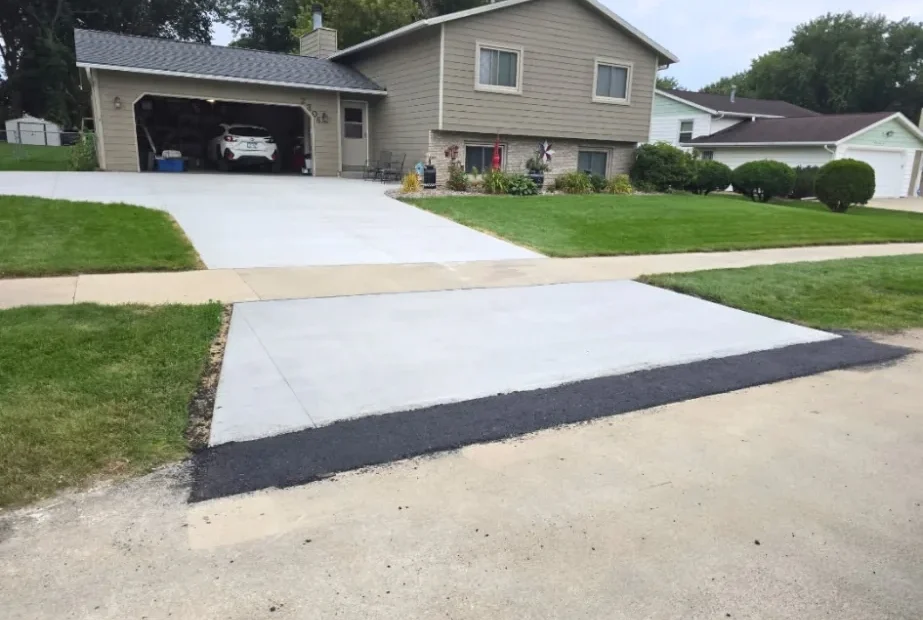
Driveway Apron Transitions: Concrete to Asphalt, Done Right
The joint where your driveway meets the street apron is where most driveway cracks start. Done right with a proper saw-cut and sealed expansion joint, that transition holds for decades.
The joint where your driveway meets the street apron is where most driveway cracks start. Done right with a proper saw-cut and sealed expansion joint, that transition holds for decades.
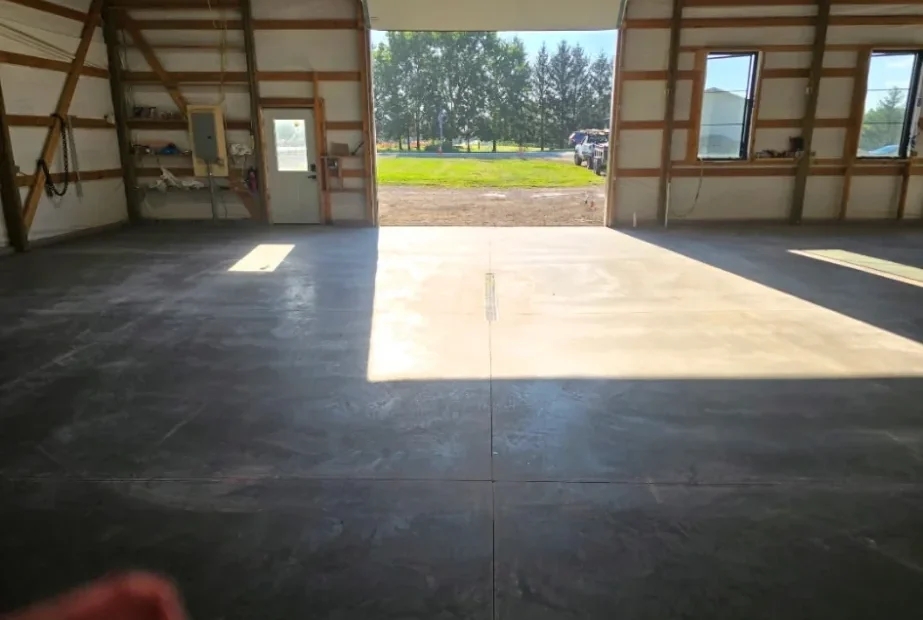
Post pressure, heavy equipment, livestock loads. A thickened-edge perimeter plus rebar mat throughout lets the slab carry what a working farm puts on concrete.

Concrete wants to crack. Control joints saw-cut within twelve hours steer the crack into a straight line where we want it, not a hairline wandering across your patio.
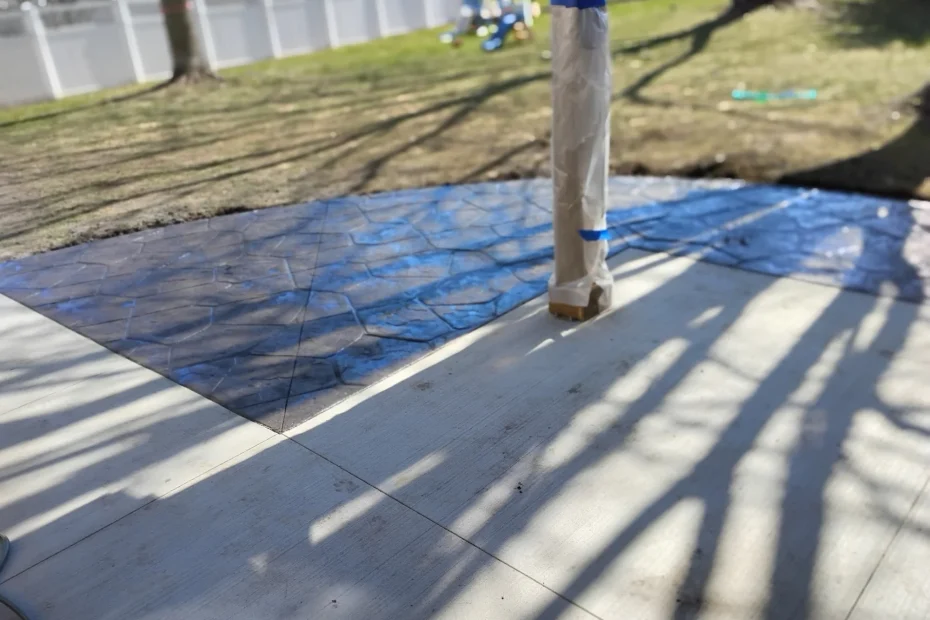
Freeze-thaw survival is not hoped for — it is spec’d. Air-entrained mix, proper cure, control joints, and positive drainage decide whether your slab makes it through twenty winters.
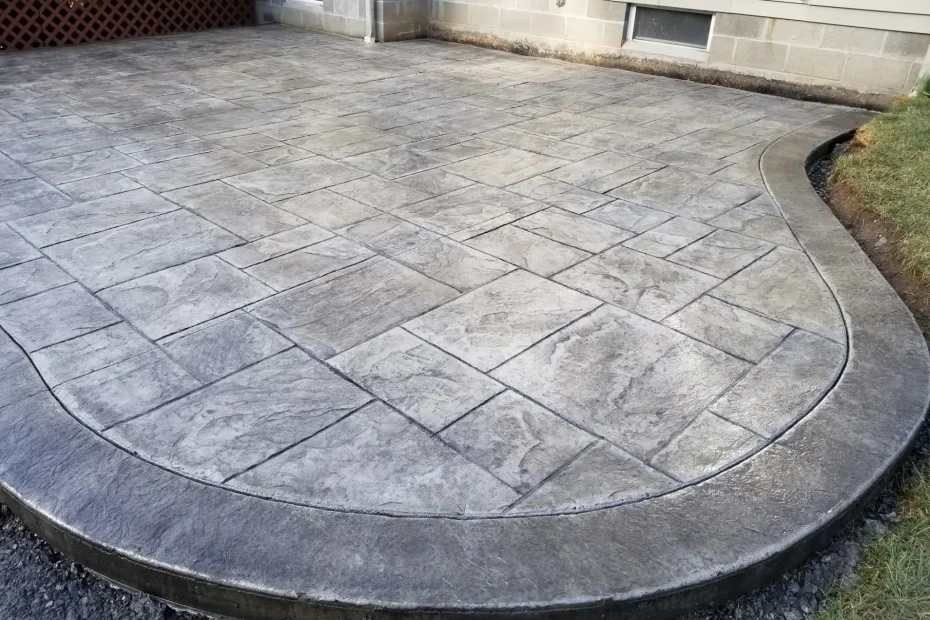
We stamp slate, ashlar, flagstone, wood-plank, and cobble with custom integral and broadcast color. Same freeze-thaw engineering as every other pour — it just looks like stone when we are done.

You do not pour on what you cannot stand on. Four inches of compacted Class 5 aggregate, drainage grade set, vapor barriers where the spec calls for them.

Wire mesh lifts when you walk a wet pour. Half-inch steel on sixteen-inch centers stays where it belongs — dead-center in the slab, exactly where freeze-thaw stress wants to split it.